

Pick an atom or a supported molecule and this lewis dot structure generator counts the real valence electrons, places bonding pairs and lone pairs the way the octet rule actually works, and refuses to guess at anything past what it can verify.
A lewis dot diagram is only useful if the dot count is right. These four cases, drawn with the same lewis structure maker as the tool above, walk through a single atom, a bent molecule with two lone pairs, a double-bonded molecule, and a molecule where the lone pair matters more than the bonds.
Oxygen sits in group 16, so it carries six valence electrons. This electron dot diagram places one dot on each of the four sides first, then pairs up two more - two lone pairs and two single dots, exactly matching the electron configuration a chemistry student would count by hand.
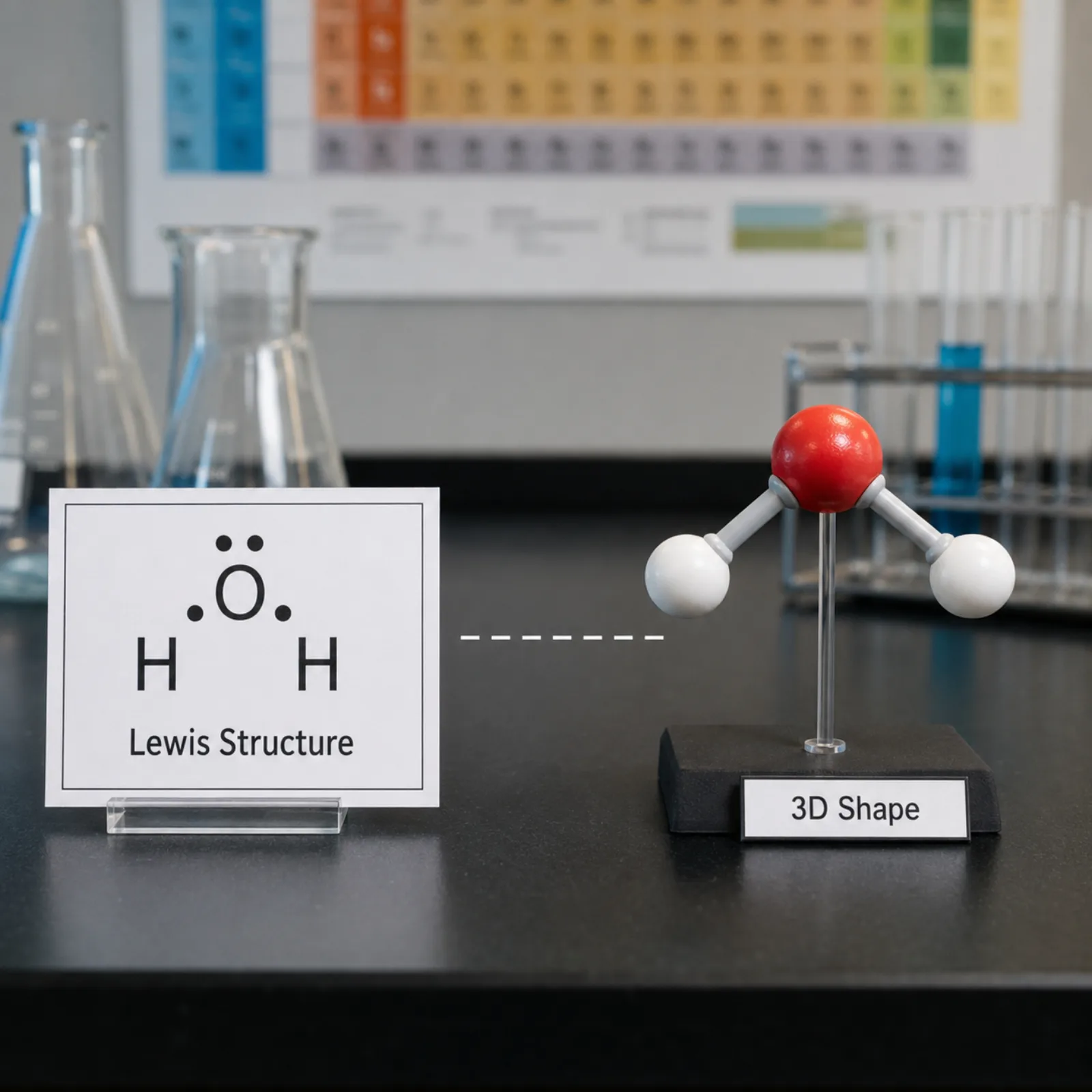
Water's eight valence electrons (six from oxygen, one from each hydrogen) split into two O-H bonding pairs and two lone pairs sitting on oxygen. Those two lone pairs are the reason water is bent instead of straight - this lewis structure maker draws the electron count, and the shape follows from it.
CO2 has sixteen valence electrons total. Two carbon-oxygen double bonds use eight of them for bonding, and the remaining eight sit as two lone pairs on each oxygen - carbon itself keeps none. Every atom still ends up with a full octet, just distributed differently than in water.
Nitrogen's five valence electrons plus three from hydrogen give ammonia eight electrons total: three N-H bonding pairs and one lone pair left on nitrogen. That lone pair doesn't bond to anything, but it's what pushes ammonia's three hydrogens into a pyramid instead of a flat triangle.
Every structure below comes from the same rules this lewis structure maker runs on-screen, so the preview and the download always agree.
Single atom mode draws a Lewis dot symbol for one element. Molecule mode picks from a fixed list of common molecules this electron dot diagram tool has already checked bond by bond.
Type a chemical symbol like O or an atomic number like 8 for a single atom, or choose a formula such as H2O, CO2, or NH3 from the molecule dropdown.
Turn on the summary line to see the total valence electrons, how many form bonding pairs, and how many remain as lone pairs - the same numbers you'd write out by hand when checking your own work.
Export a vector file for a worksheet or a PNG for slides. Both come from the exact diagram on screen, so there's nothing to re-verify after export.
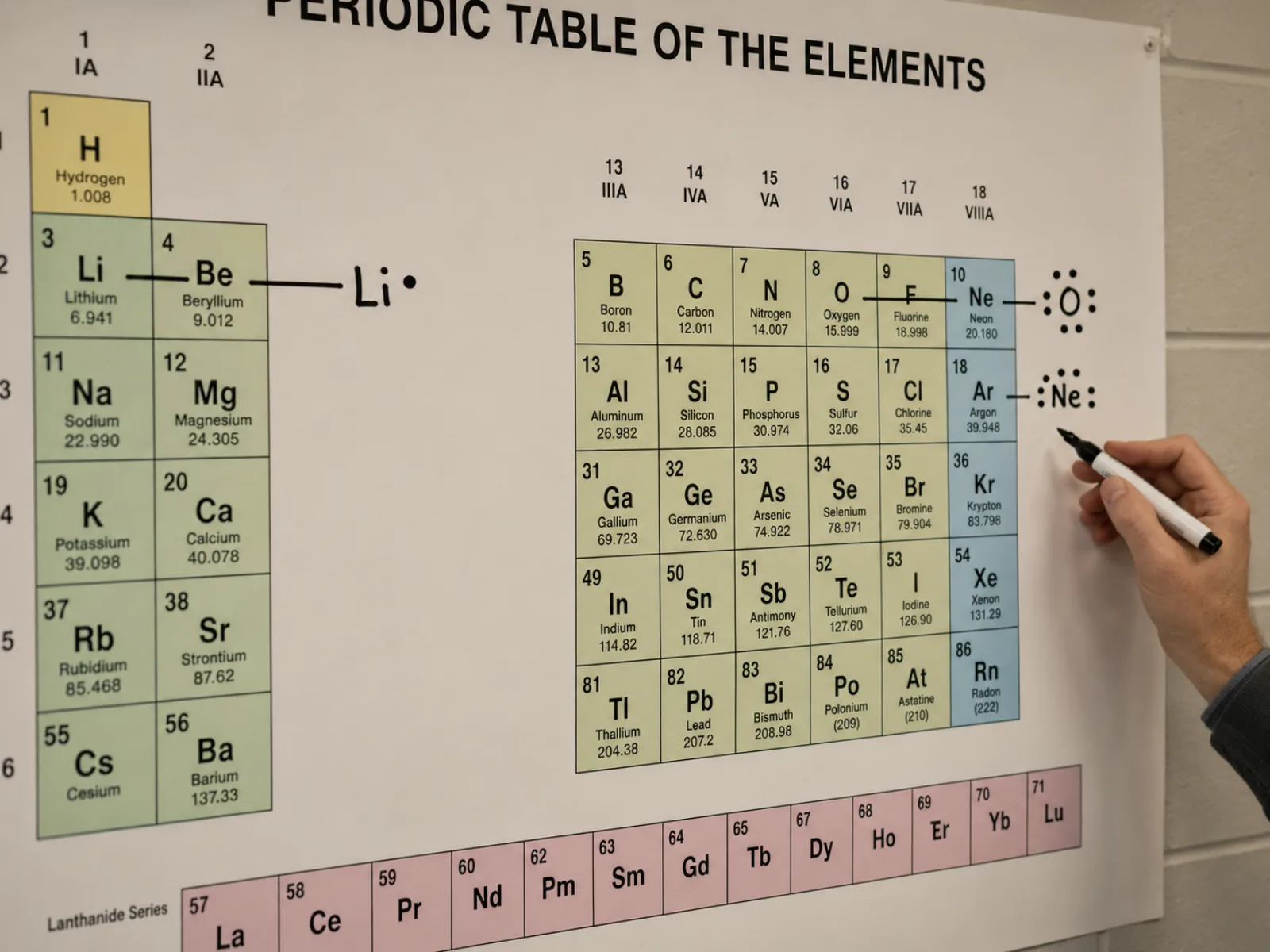
Single-atom mode reads valence electrons from each main-group element's actual group number - one for lithium and sodium, six for oxygen and sulfur, eight for the noble gases except helium's two. Nothing is hardcoded to a generic pattern that breaks on real elements.

Every molecule in the dropdown - water, carbon dioxide, ammonia, methane, and more - has its bonding pairs and lone pairs verified against the total valence electron count and the octet rule by hand. Formulas outside that list are declined instead of drawn wrong.
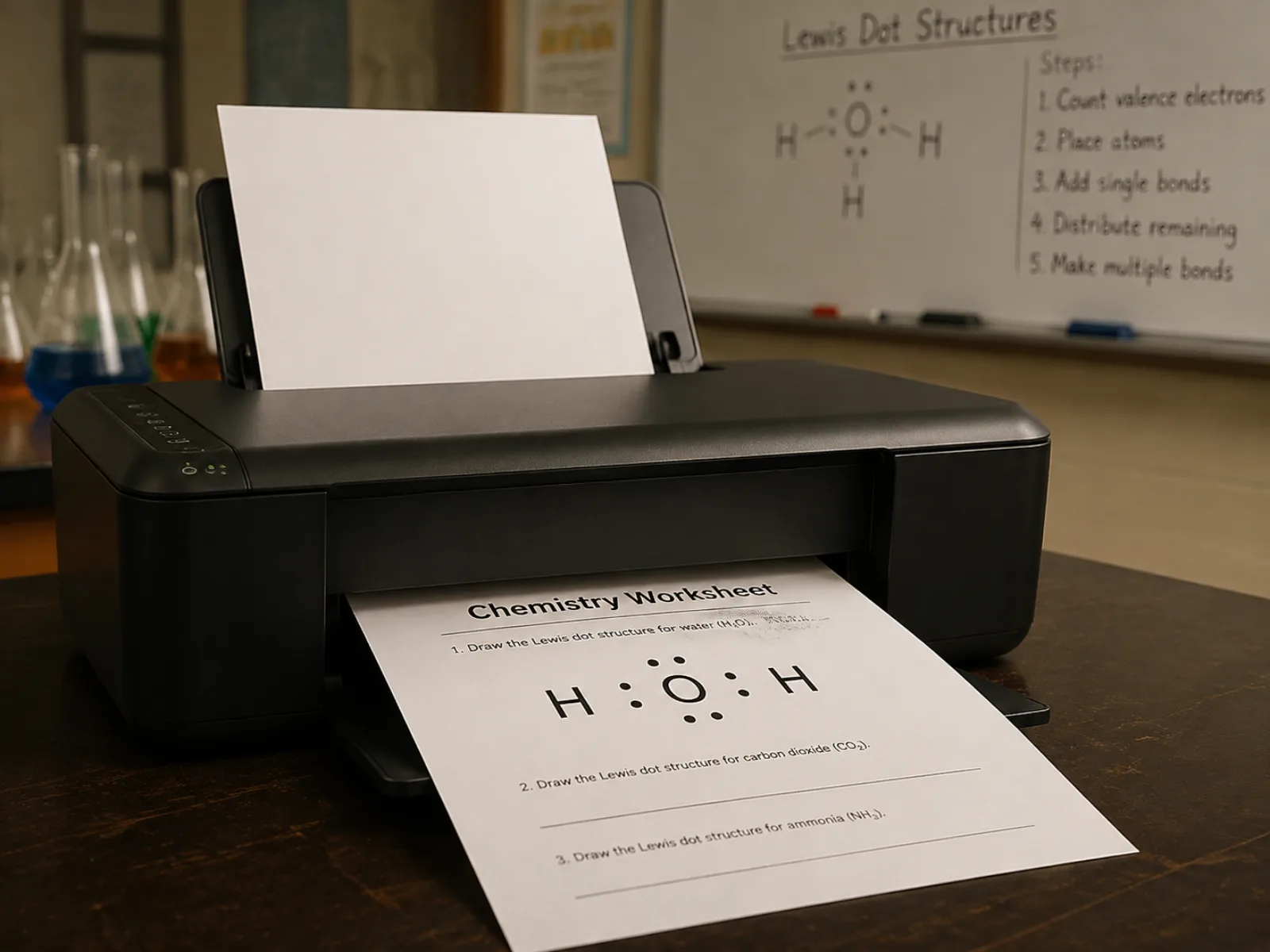
Download a crisp vector SVG for handouts or a PNG sized for slides. The exported file matches the on-screen preview exactly, so this lewis dot structure generator never hands you a diagram that drifted from what you checked.
A Lewis structure (also called an electron dot diagram) is a shorthand for showing how valence electrons are arranged in an atom or molecule: dots for lone pairs, lines or dot pairs for shared bonding electrons. Gilbert N. Lewis introduced the notation in 1916, and it remains the fastest way to answer three questions before doing anything else with a molecule - how many valence electrons are there, which atoms are bonded, and which electrons are left over as lone pairs.
What it doesn't show is geometry. A Lewis dot diagram of water places two lone pairs and two bonds around oxygen, but it doesn't by itself tell you the H-O-H angle is close to 104.5 degrees - that prediction comes from VSEPR theory, which takes the electron domain count a Lewis structure gives you and reasons about how those domains repel each other in three dimensions. Treat a Lewis structure as the electron-counting step that VSEPR builds on, not as a picture of molecular shape.
The octet rule also has real, well-documented exceptions this generator's whitelist accounts for rather than hides. Hydrogen and helium are satisfied with two electrons, not eight. Some period-three-and-beyond atoms, like the sulfur in sulfur dioxide, can hold more than eight electrons in an expanded octet. And a handful of molecules, oxygen gas among them, don't have a single Lewis structure that matches every observed property - O2's simple double-bond structure pairs up all its electrons on paper, but the real molecule is paramagnetic, meaning it actually has two unpaired electrons that a basic dot diagram can't represent.
The questions that come up most often once students move from the definition to drawing their own structures.
Pair this lewis structure maker with these other classroom-ready tools when you need more than one diagram for a lesson or lab report.
The atom and molecule controls are right at the top of this page - switch modes, change the selection, and pull a fresh SVG or PNG from this lewis dot structure generator whenever the next diagram comes up.