

Build a Frayer model online for any vocabulary word or concept: type a term, fill in its definition, characteristics, examples, and non-examples, and export a clean four-square graphic organizer ready for a worksheet or slide deck — free, no signup.
The Frayer model is a four-square graphic organizer for building deep understanding of a single word or concept. Educational researcher Dorothy Frayer and colleagues developed it at the University of Wisconsin in 1969 as part of a study on how students form concepts.
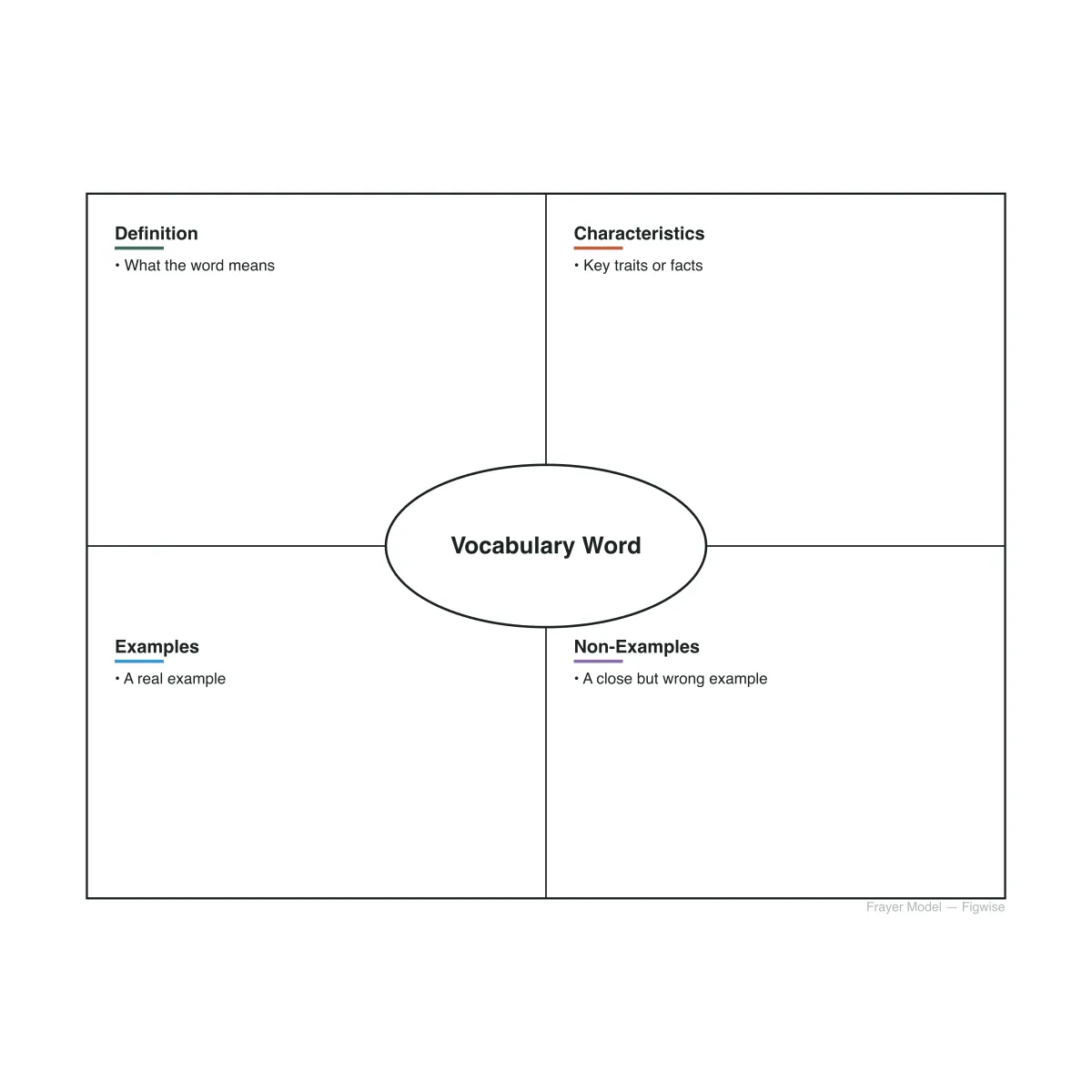
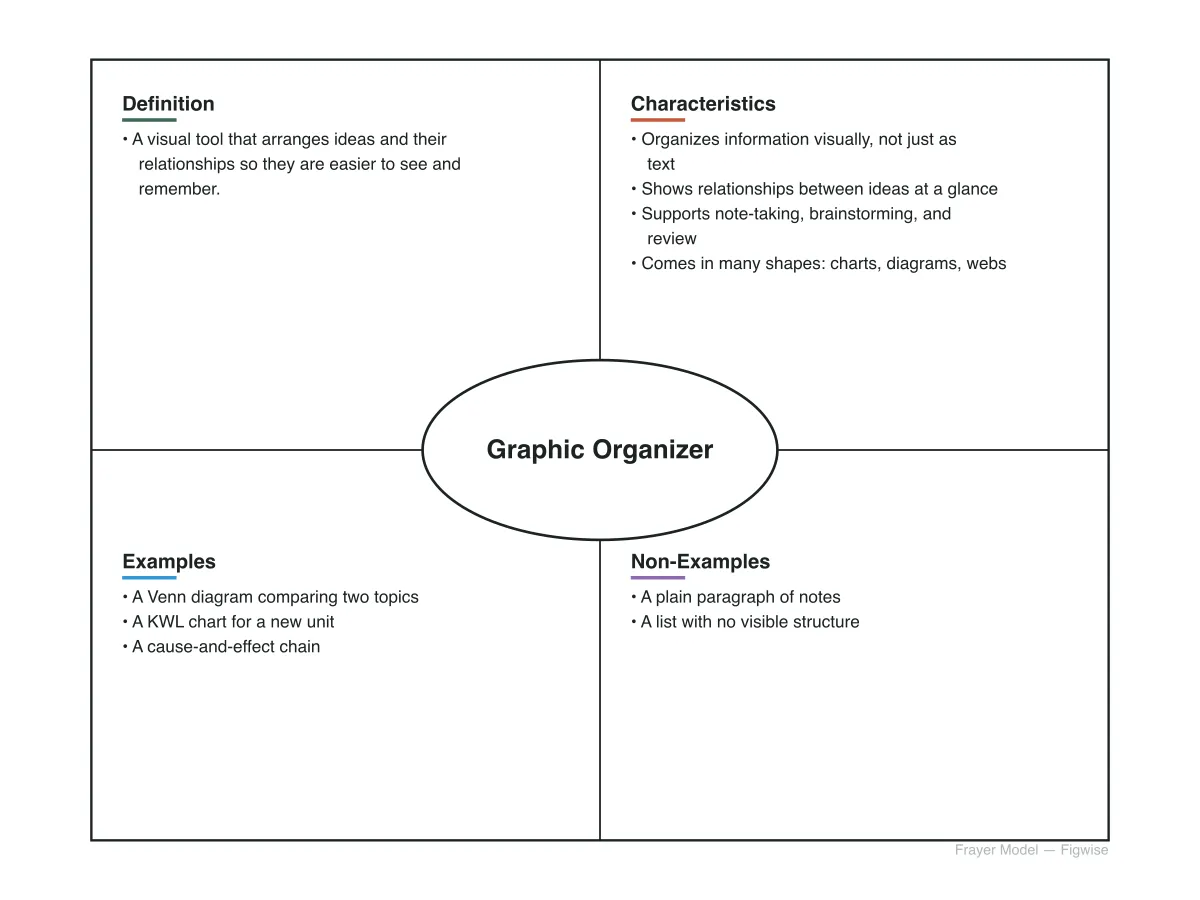
A blank version of it divides a page into four quadrants — definition, characteristics, examples, and non-examples — around a target term in the center. Filling in all four pushes a learner past a memorized dictionary line into what the word looks like in practice.
Teachers use it before, during, and after a unit: as a pre-assessment of prior knowledge, a note-taking frame while reading, or a review activity before a test — for a single word, a science concept, or a historical event.
Four filled-in Frayer models generated with this tool, spanning a science vocabulary word, a math term, a literary device, and an ELL classroom staple — the same four-square layout, restocked with subject-specific characteristics and examples each time.
A Frayer model for the term ecosystem, with characteristics like producers, consumers, and decomposers, real-world examples such as a coral reef or a temperate forest, and a non-example like a single isolated organism with no surrounding habitat.
This one is built around the math vocabulary word quotient, pairing its definition with characteristics like division and remainders, worked examples such as 12 divided by 4, and common non-examples like a sum or a product that students often confuse it with.
This one covers the literary term metaphor, listing characteristics such as an implied comparison without like or as, separating it from a simile or a literal statement in the non-examples box, while examples pull lines straight from familiar class texts.
This one is set up for an English language learner or bilingual classroom, where short characteristics, a first-language cognate, and picture-friendly examples scaffold a new word before it appears in a reading passage.
Here is how this Frayer model maker turns a target word and four short lists into a ready-to-print graphic organizer, without any layout or design work on your end.
Type the vocabulary word or concept you want students to master. It sits in the oval at the center of the four-square layout, where it stays visible no matter which quadrant a reader looks at next.
Add a clear, student-friendly definition in the top-left quadrant — shorter than a dictionary entry, in language your class actually uses, and specific enough to distinguish the term from words it is often confused with.
Fill the remaining three boxes one line at a time: defining characteristics or attributes, real examples of the term in use, and non-examples that mark where the concept stops applying.
It redraws as you type, so every edit to a quadrant is visible immediately. When all four boxes look right, download it as an SVG for further editing or a PNG for printing and slides.
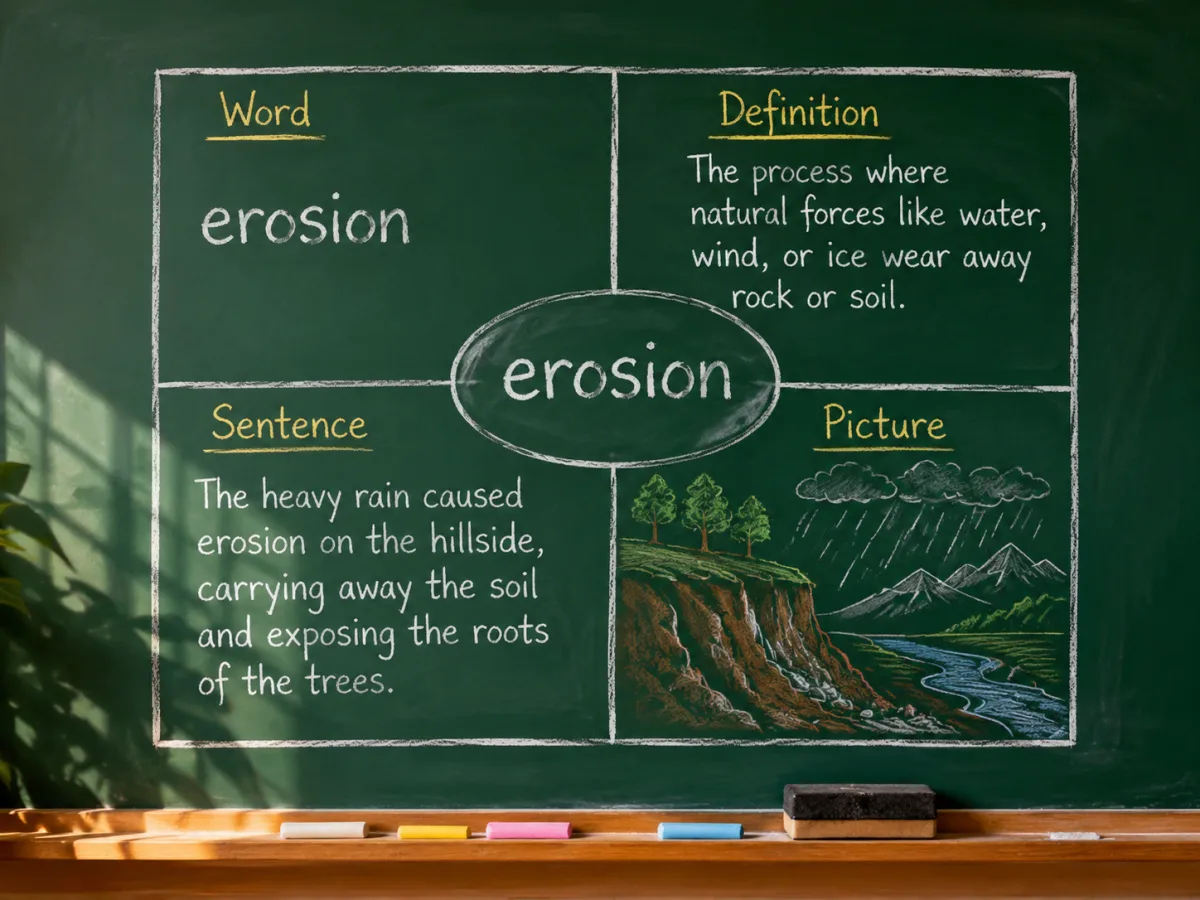
Rename any of the four quadrant labels to match how your class works — swap definition, characteristics, examples, and non-examples for a 4-square vocabulary layout with word, picture, sentence, and synonym boxes instead, without losing the center oval or the underlying layout.
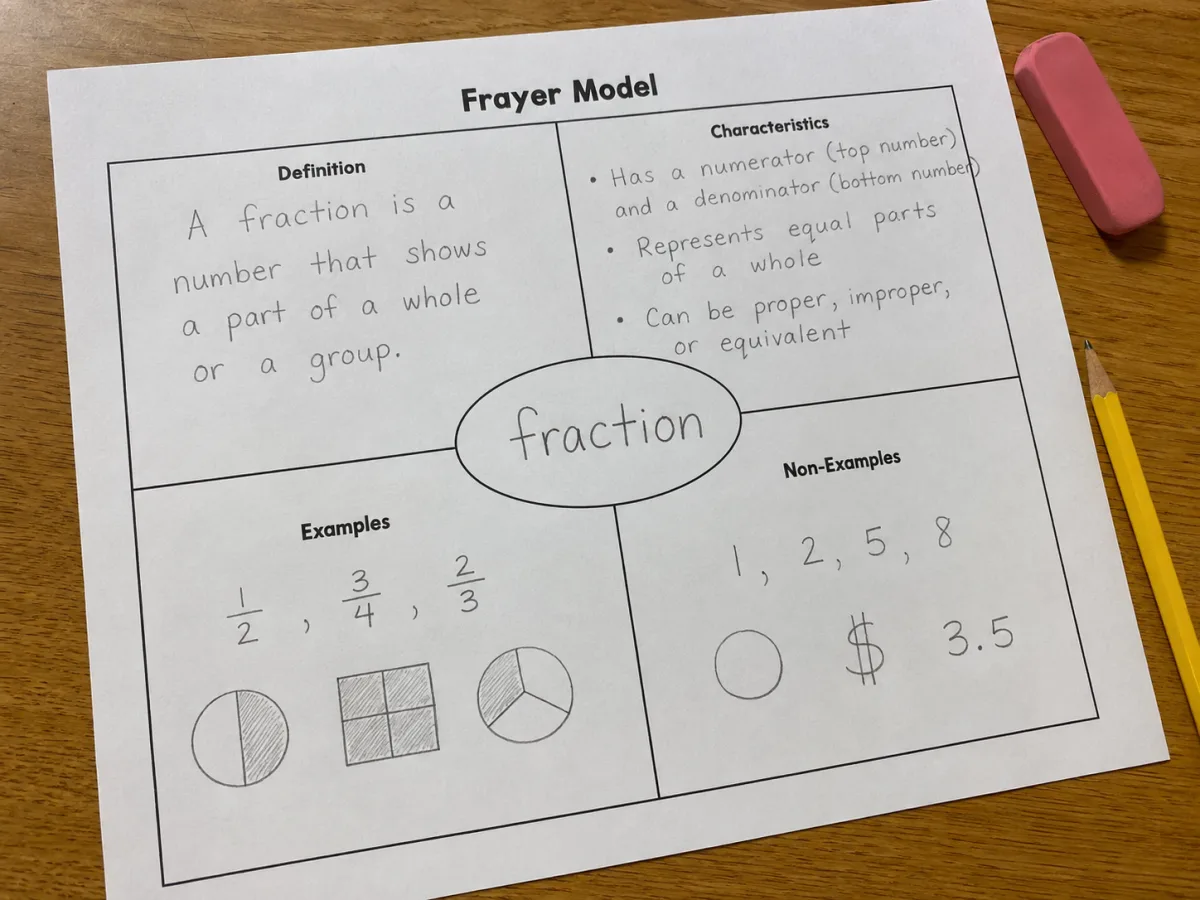
Every organizer exports as a clean SVG or a high-resolution PNG, ready to print as a worksheet, drop into slides, or paste into a lesson plan — no login wall and no screenshot artifacts to clean up first.
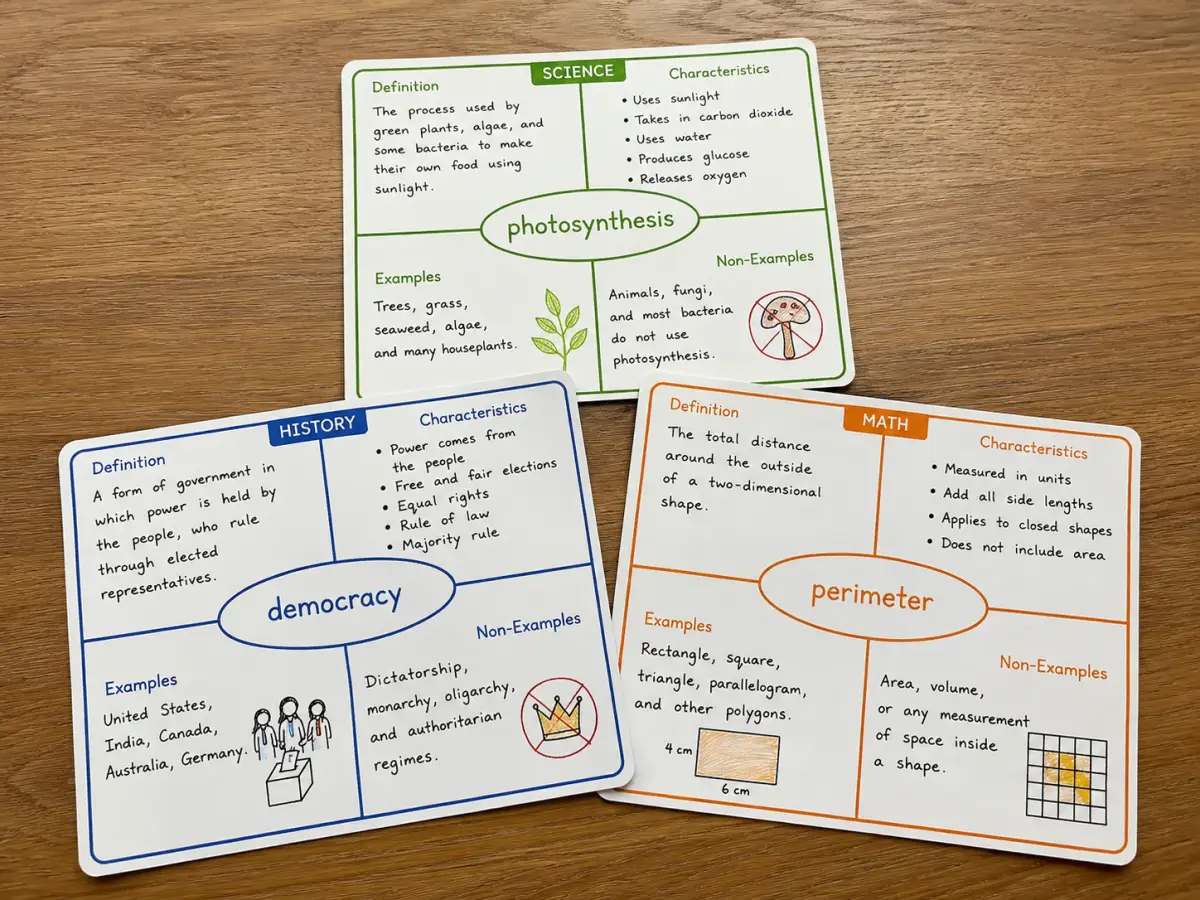
Science terms, math vocabulary, literary devices, historical concepts, or a second language — the same four-square structure adapts to any subject where students need to go beyond a one-line definition and actually work with a word.
Answers to the questions teachers and students most often ask about the Frayer model, its origin, and how it compares with similar vocabulary charts.
Other free diagram makers on Figwise that pair well with a Frayer model in a lesson plan or a study guide.
Enter a word, fill in the four boxes, and export a print-ready graphic organizer for your next lesson — all in your browser, with nothing to install.