

A Punnett square generator for the classroom and the lab bench: enter both parents' genotypes and get the offspring grid, genotype ratio, and phenotype ratio worked out automatically.
Each card below is a real export from this Punnett square maker, not a mockup. Load any of them as a starting point, then swap in your own genotypes.
A single-gene cross for pea plant height. Both parents are heterozygous, so the 2×2 grid splits into a 1:2:1 genotype ratio and a 3:1 tall-to-short phenotype ratio.
Crossing a tall plant of unknown genotype against a homozygous recessive tester reveals a hidden recessive allele — a 1:1 split confirms the parent is heterozygous.
Two independently assorting genes fill a 4×4 grid with 16 combinations. Seed shape and seed color together settle into the classic 9:3:3:1 phenotype ratio.
X-linked traits break the usual dominant/recessive pattern for one sex. Sons inherit their single X allele straight from their mother, producing a different ratio in daughters than in sons.
A Punnett square is a grid that predicts the genotypes a cross between two parents can produce. Each parent's possible gametes line up along the top and side, and every cell shows what happens when one gamete from each side combines.
The result is a probability, not a guarantee. A 3:1 ratio means each offspring has roughly a 75% chance of the dominant trait, the way a coin lands heads about half the time over many flips — a small litter can still land outside that split.
The model also assumes one gene at a time on separate chromosomes. Many real traits involve several genes acting together, or genes linked on the same chromosome, so a single square is a starting point rather than the full picture for those more complex cases.
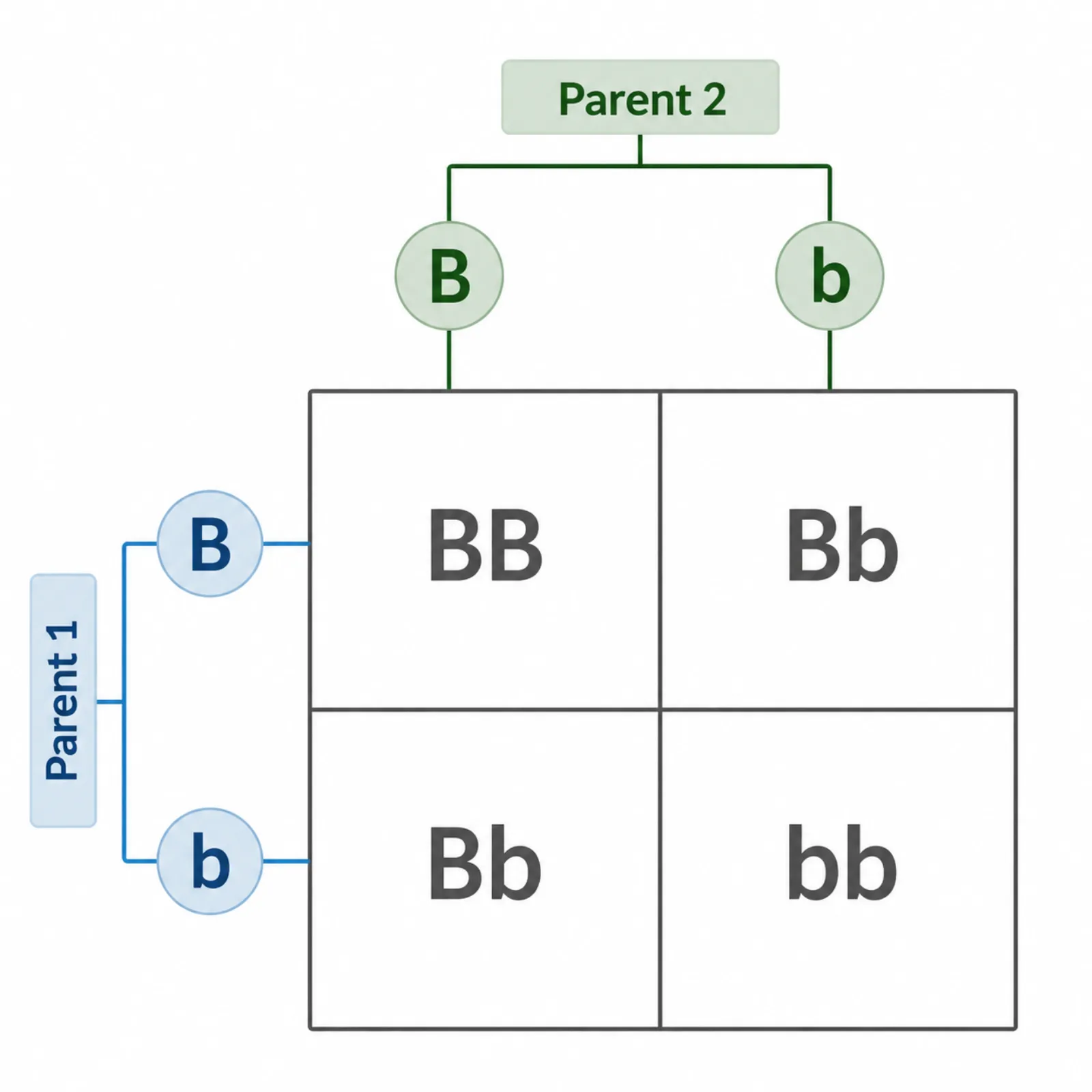
Whether you're checking a single gene or running a full dihybrid cross, this Punnett square maker walks through the same four steps.
Type each parent's alleles using the same letter in upper and lower case — Aa for a heterozygous parent, aa for homozygous recessive.
Switch to the two-gene layout for a dihybrid cross like AaBb × AaBb; the grid changes from 2×2 to 4×4 and every gamete combination per parent is worked out automatically.
Label what the dominant and recessive alleles actually look like — Tall and Short, Yellow and Green — so the filled grid reads as biology, not just letters.
The genotype and phenotype ratios appear below the grid; download the finished square as SVG or PNG for a lab notebook, worksheet, or slide deck.
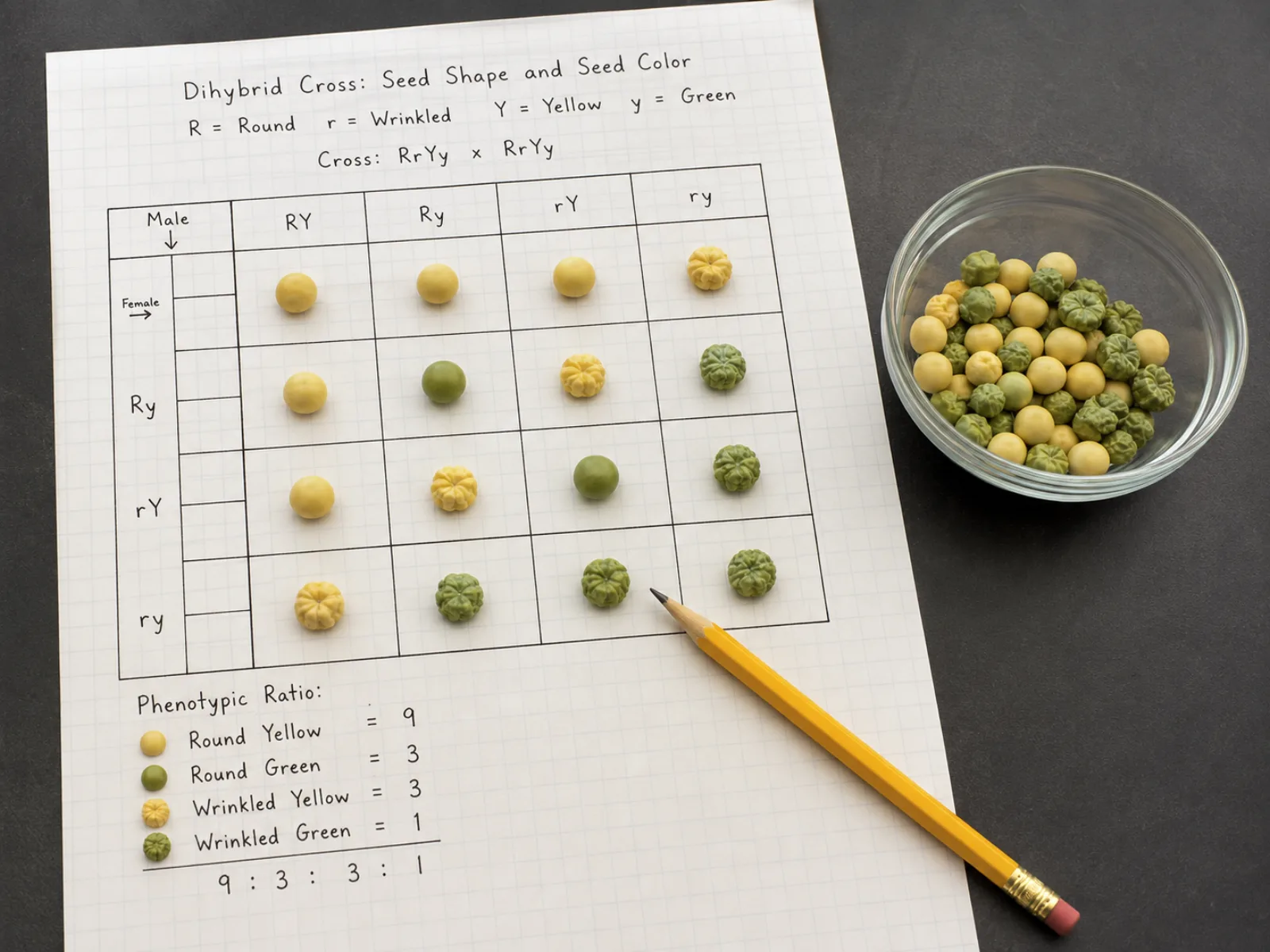
Working out a dihybrid cross by hand means tracking eight gametes and sixteen boxes. This Punnett square generator lists all four gamete combinations per parent, fills every cell, and tallies the resulting genotype and phenotype ratios automatically.
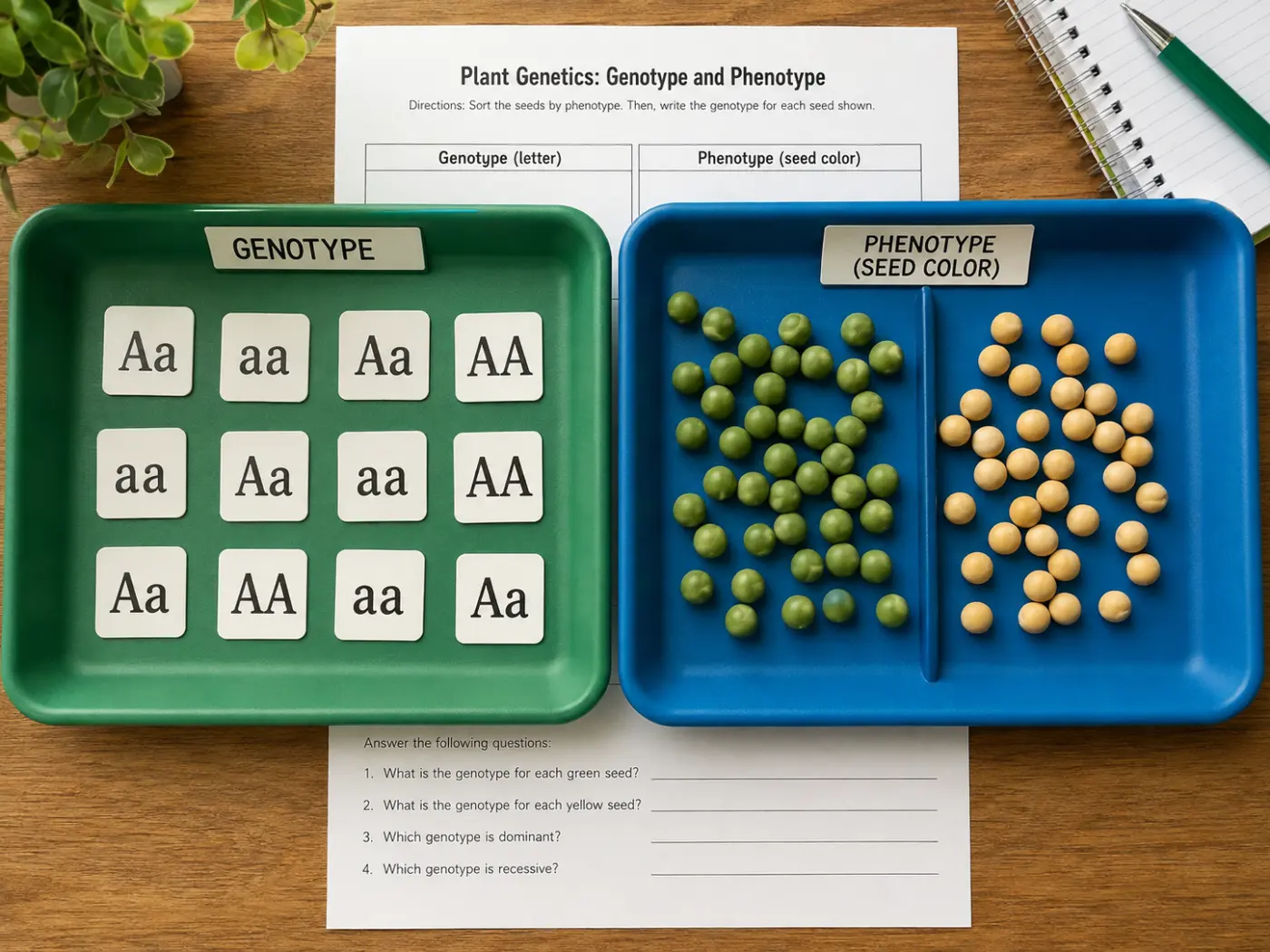
A genotype ratio and a phenotype ratio answer different questions — one describes the alleles offspring carry, the other what a person would actually see. This Punnett square maker tallies both from the same grid, reduced to the simplest whole-number ratio, so they never get mixed together.
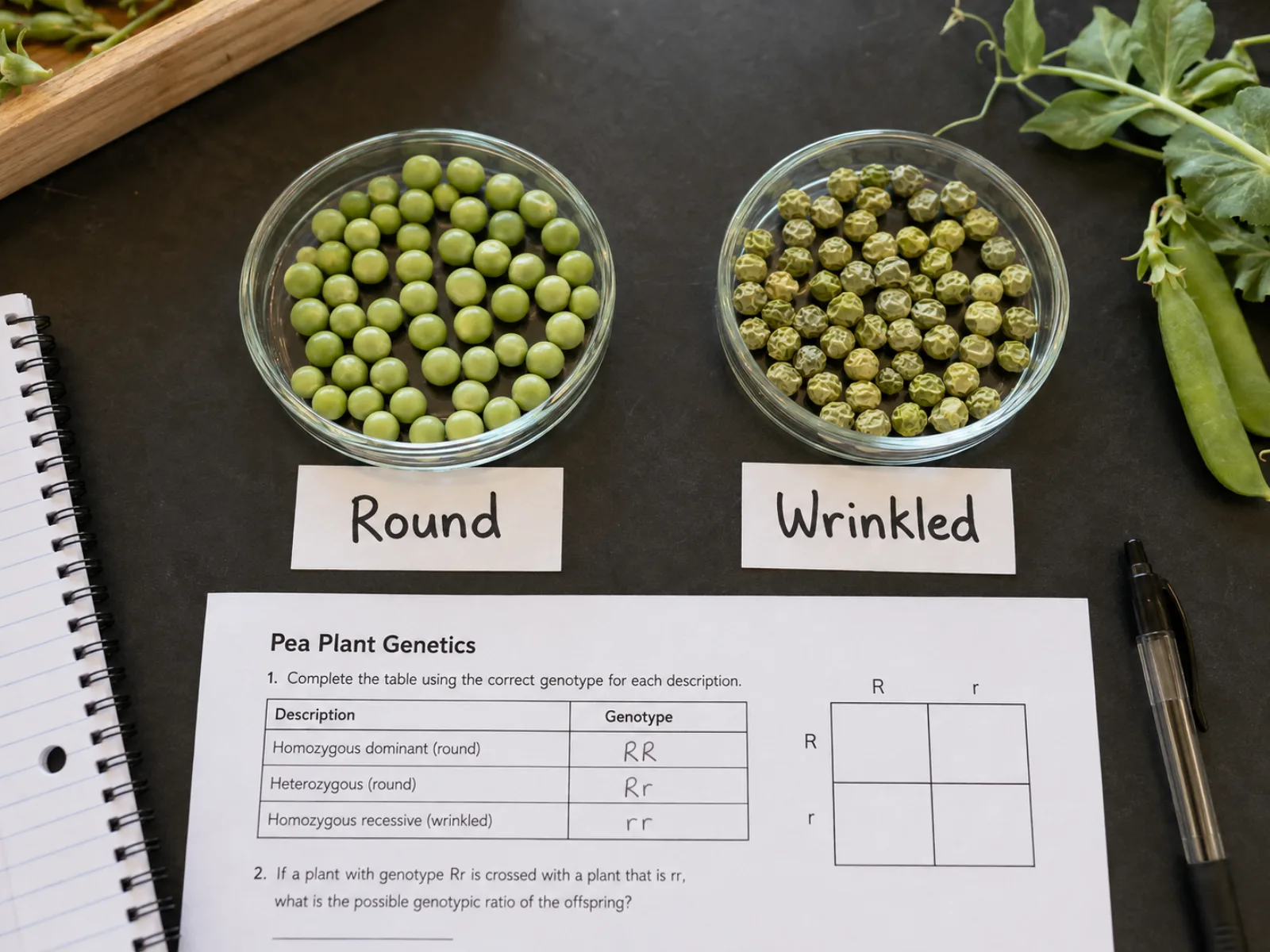
Every gene can carry a real trait name plus separate dominant and recessive phenotype labels, so a grid filled with Aa and aa also reads as Tall and Short, or Round and Wrinkled, for students who haven't memorized the shorthand yet.
Common questions from students and teachers using this Punnett square maker.
Enter each parent's genotype in this Punnett square maker, flip on a second gene for a dihybrid cross, and the grid, ratios, and export are already waiting below.