

Name the theory, list its constructs and hypotheses, and get a labeled theoretical framework diagram. Free to download.
A theoretical framework is the established theory you borrow to explain your research problem — a body of concepts, definitions and propositions already tested by other scholars, such as the Technology Acceptance Model or Social Cognitive Theory.
It appears early in a thesis or paper, usually right after the introduction, and justifies why the phenomenon under study should behave the way the theory predicts, before any of your own study-specific variables enter the picture.
A theoretical framework diagram makes that borrowed structure visible: the theory's name sits as a top-level label, its constructs become labeled boxes, and each hypothesized relationship becomes a numbered arrow — H1, H2, H3 — so a reviewer can check your hypotheses against the theory at a glance.

Four starting points, each anchored to a widely cited theory — from technology adoption to behavior change.
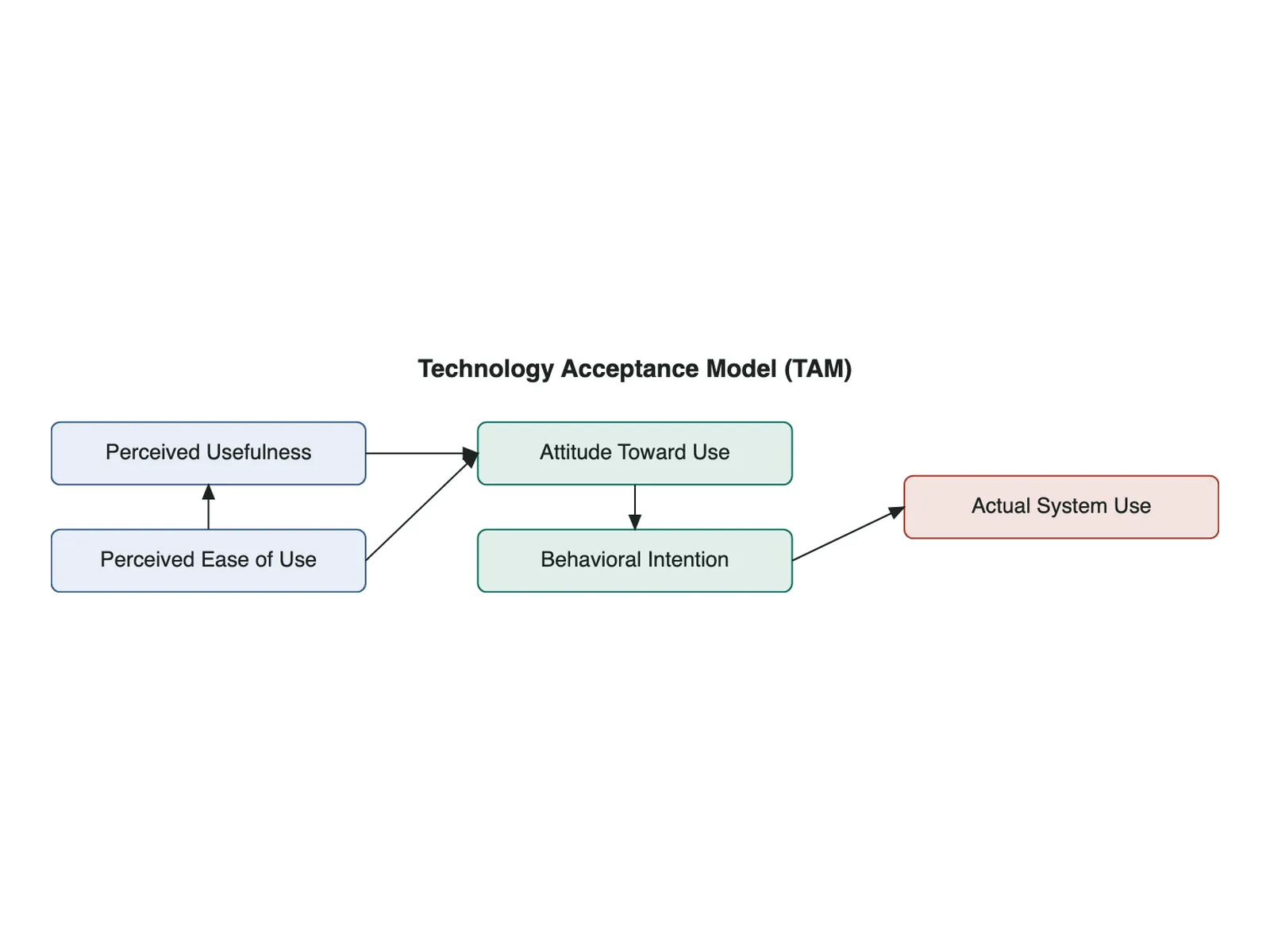
Perceived usefulness and perceived ease of use predict attitude toward a new system, which predicts behavioral intention to use it — the base model behind most IT-adoption studies.
Attitude, subjective norms, and perceived behavioral control jointly predict intention, with perceived behavioral control also reaching behavior directly — the standard structure for behavior-change research.
Self-efficacy and outcome expectations predict adoption intention, moderated by observational learning from peer demonstrations — a common structure in organizational and educational research.
Relative advantage, compatibility, and trialability predict adoption rate, moderated by contact with an extension agent — Rogers' theory applied to a technology-adoption study.

Name the theory you're building on — Technology Acceptance Model, Self-Determination Theory, or any theory from your literature review — and the generator renders it as a top banner label, not just another construct box, so the diagram reads as theory-grounded at a glance.
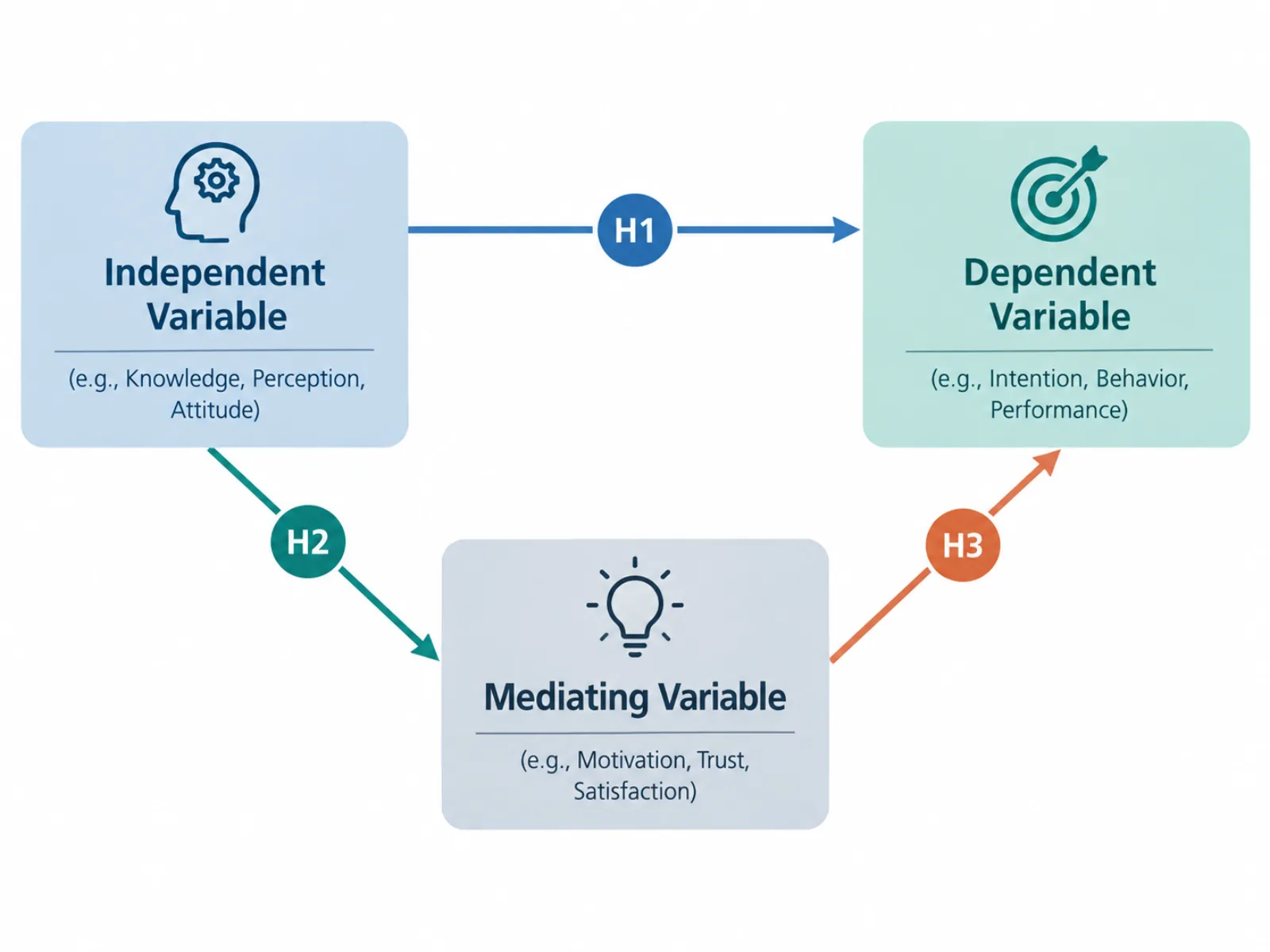
Describe your hypotheses in plain language and the theoretical framework maker tags each arrow H1, H2, H3 in the order you state them, matching the numbering convention your methodology chapter already uses.
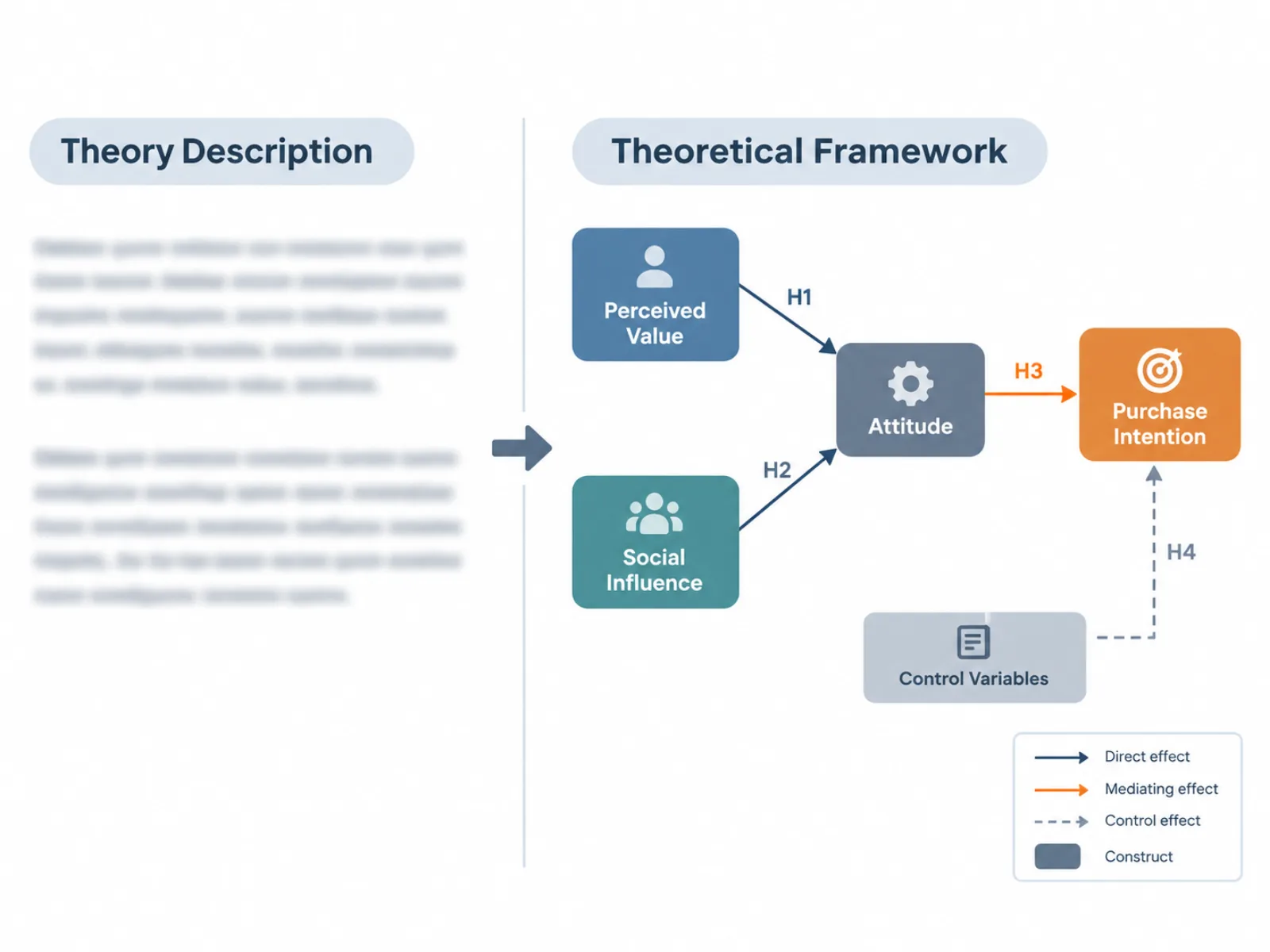
No node editor to learn — paste the paragraph you'd otherwise hand a supervisor, naming the theory and its constructs, and the generator infers the boxes, labels and arrow directions from that description.
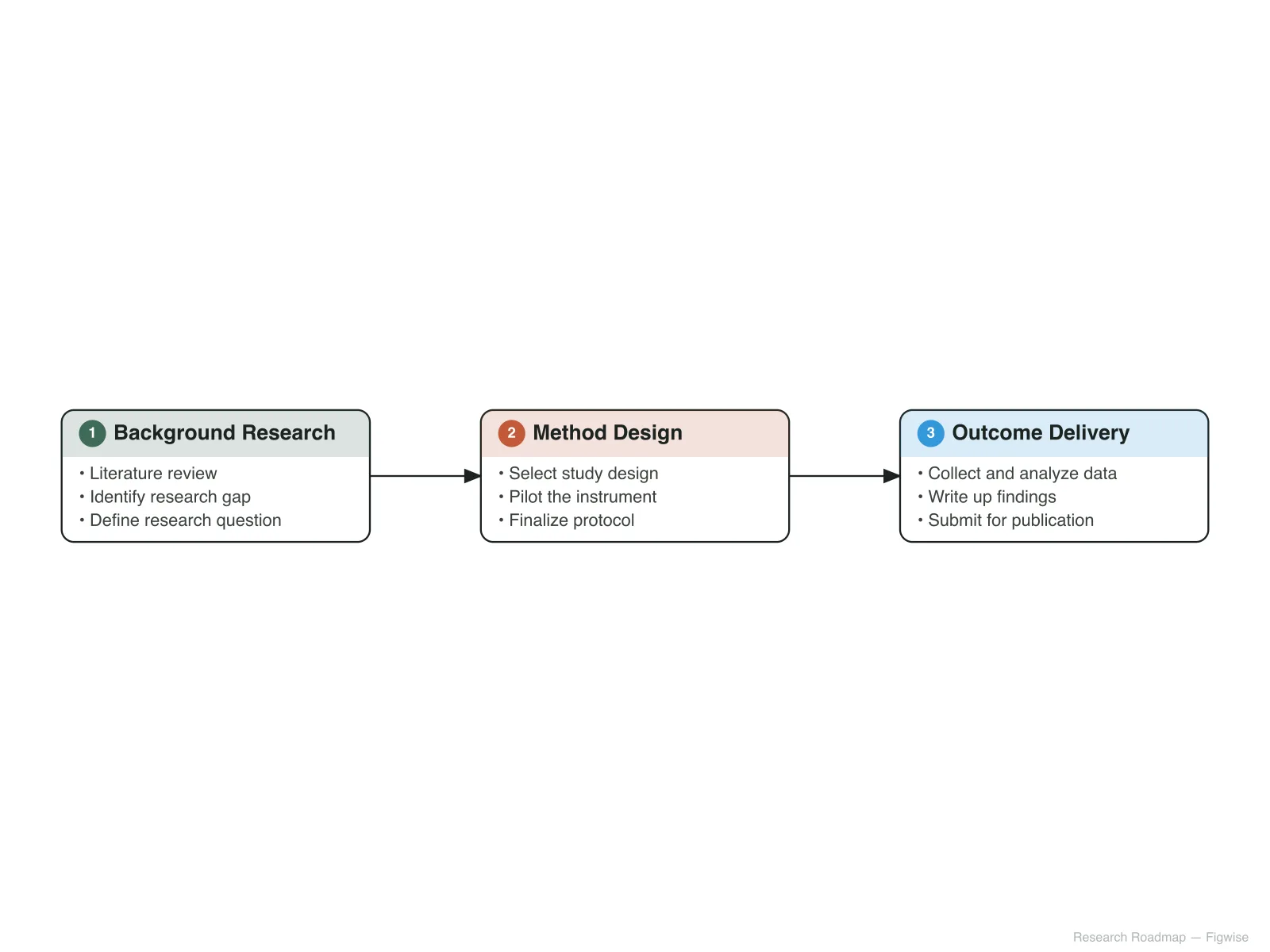
Four steps from naming your theory to an exportable diagram.
State the established theory you're drawing on — Technology Acceptance Model, Theory of Planned Behavior, or any theory from your literature review.
Write one or two sentences naming the theory's constructs and how you expect them to relate, the same way you'd summarize the theory section to a colleague.
The theoretical framework generator reads the description, places the theory name as a top label, and numbers each hypothesis arrow H1, H2, H3 in order.
Confirm each arrow's H-number matches the hypothesis numbering in your methodology section, then export the diagram as a high-resolution PNG.
* Exports high-resolution PNG.
Both terms describe a framework section in a thesis, but reviewers expect them in different places, doing different jobs.
Borrowed structure from an established theory
Study-specific map of your own variables
Five theories that show up across disciplines, each explaining a different kind of variable relationship.
Explains adoption as perceived usefulness and ease of use predicting attitude and intention to use a system.
Explains intention as a function of attitude, subjective norms, and perceived behavioral control over an action.
Explains behavior as a product of self-efficacy, outcome expectations, and observational learning from others.
Explains adoption rate through the relative advantage, compatibility, and trialability of a new practice or product.
Explains motivation as the satisfaction of autonomy, competence, and relatedness needs behind a behavior.
Methodology questions answered before you write your own.
* Exports high-resolution PNG.
Name the theory once and get a publication-ready framework diagram — sign up for free starter credits and try it.