

Type each relative as one line of text — sex, affected status, parents, twins — and this pedigree chart maker lays out the generations, marriage lines, and standard genetics symbols automatically.
Each line: id, generation, sex (male/female/unknown), status (unaffected/affected/carrier/carrierx), then optional flags — deceased, proband, parents=idA+idB, twins=groupName, mz (monozygotic). Example: II-1, 2, female, affected, proband, parents=I-1+I-2
This pedigree chart maker reads a short text description of a family and draws the standard genetics diagram from it — here is the four-step workflow.
Give each person an id, a generation number, a sex (male, female, or unknown), and a status (unaffected, affected, or carrier). The built-in syntax guide below the text box spells out every field.
Add parents=motherID+fatherID to a child's line and the pedigree chart generator draws the marriage line between the parents and a sibling line connecting every child listed under them.
Flag deceased or proband on any line, and choose carrier for an unaffected autosomal-recessive carrier or carrierx for an X-linked carrier — each renders with its correct symbol automatically.
The chart re-renders as you type. Once every generation reads correctly, export the pedigree chart as SVG for further editing or PNG for a slide, worksheet, or lab report.
Each card is a real export from this pedigree chart maker's text syntax, not a mockup — load any one as a starting template and edit the family in place.
An affected founding couple's grandchild is also affected with no generation skipped in between — the hallmark of autosomal dominant inheritance, where one copy of the allele is enough to show the trait.
Two unaffected carrier parents (small dot inside the symbol) have an affected daughter — the trait appears to skip a generation because carriers show no outward sign of it themselves.
A carrier mother (half-filled symbol) passes the trait to sons directly, while a daughter needs the allele from both parents to be affected herself — this male bias is the classic tell for X-linked recessive genetic pedigree cases.
Identical twin sisters share the same converging twin line and horizontal bar, and an arrow marks the proband — the individual whose case first brought the family to attention in a case study.
A pedigree chart, also called a family pedigree diagram, is a standardized map of a family across generations that shows who is affected by a trait, who is a carrier, and how everyone is related. Squares mark males, circles mark females, and a diamond marks an individual of unknown or unspecified sex. A filled symbol means the person shows the trait; an open symbol means they don't.
The pattern of filled and open symbols across generations is what reveals the mode of inheritance. If the trait shows up in nearly every generation and affected parents tend to have affected children, that points to a dominant allele — one copy is enough. If it skips a generation, appearing in a child of two unaffected parents, both parents were most likely unaffected carriers of a recessive allele, and the child inherited a copy from each side.
Whether a recessive trait is autosomal or X-linked shows up in who gets affected. An autosomal recessive trait affects males and females at roughly equal rates. An X-linked recessive trait affects far more males than females, because a son has only one X chromosome and shows the trait as soon as he inherits it, while a daughter needs two copies — one from each parent. A genetic pedigree with several more affected sons than daughters is the signature to look for.

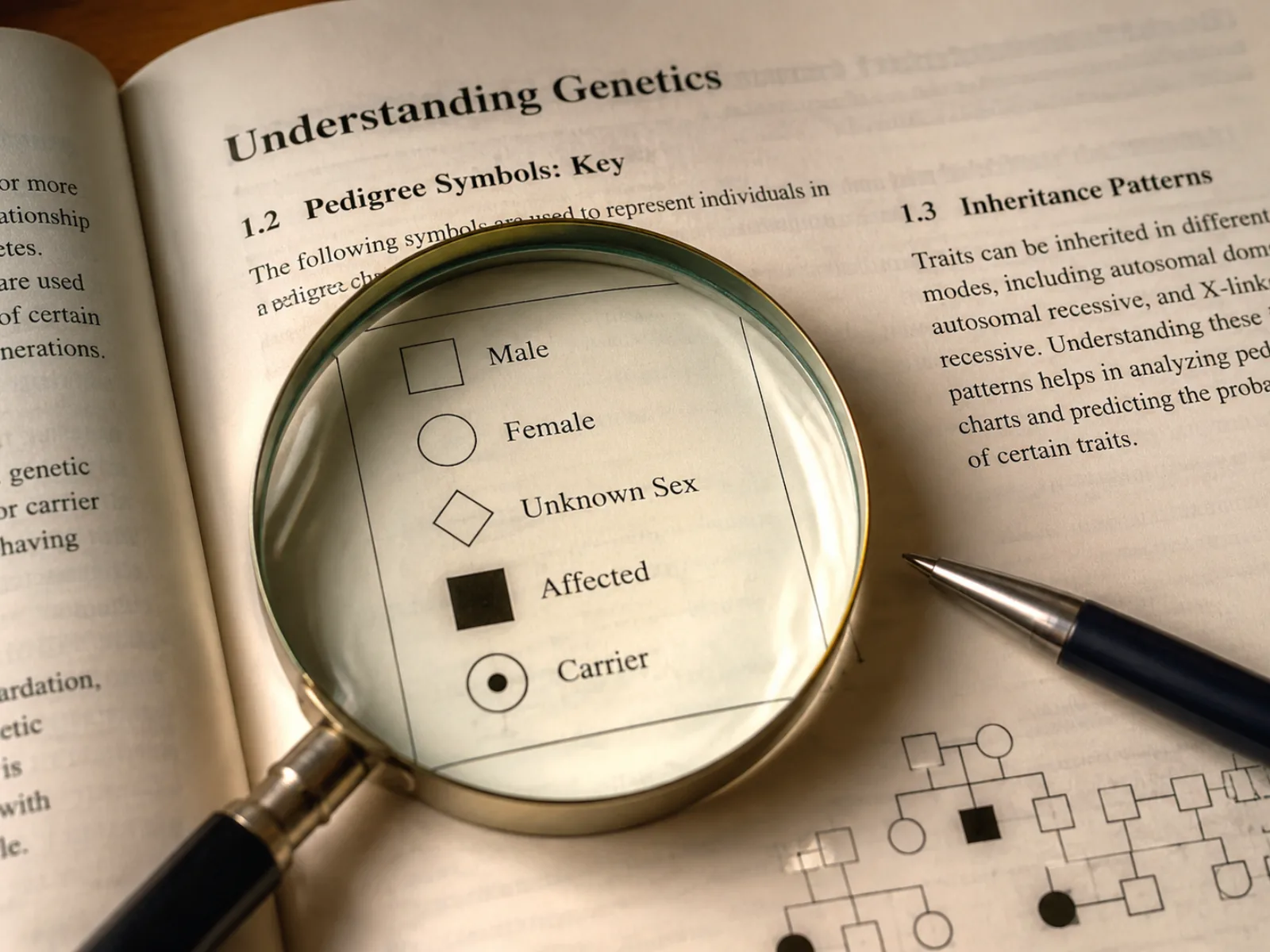
Squares for males, circles for females, diamonds for unknown sex, filled symbols for affected individuals, a center dot for autosomal-recessive carriers, and a half-filled symbol for X-linked carriers — each one renders correctly straight from the text you type, with no manual drawing.
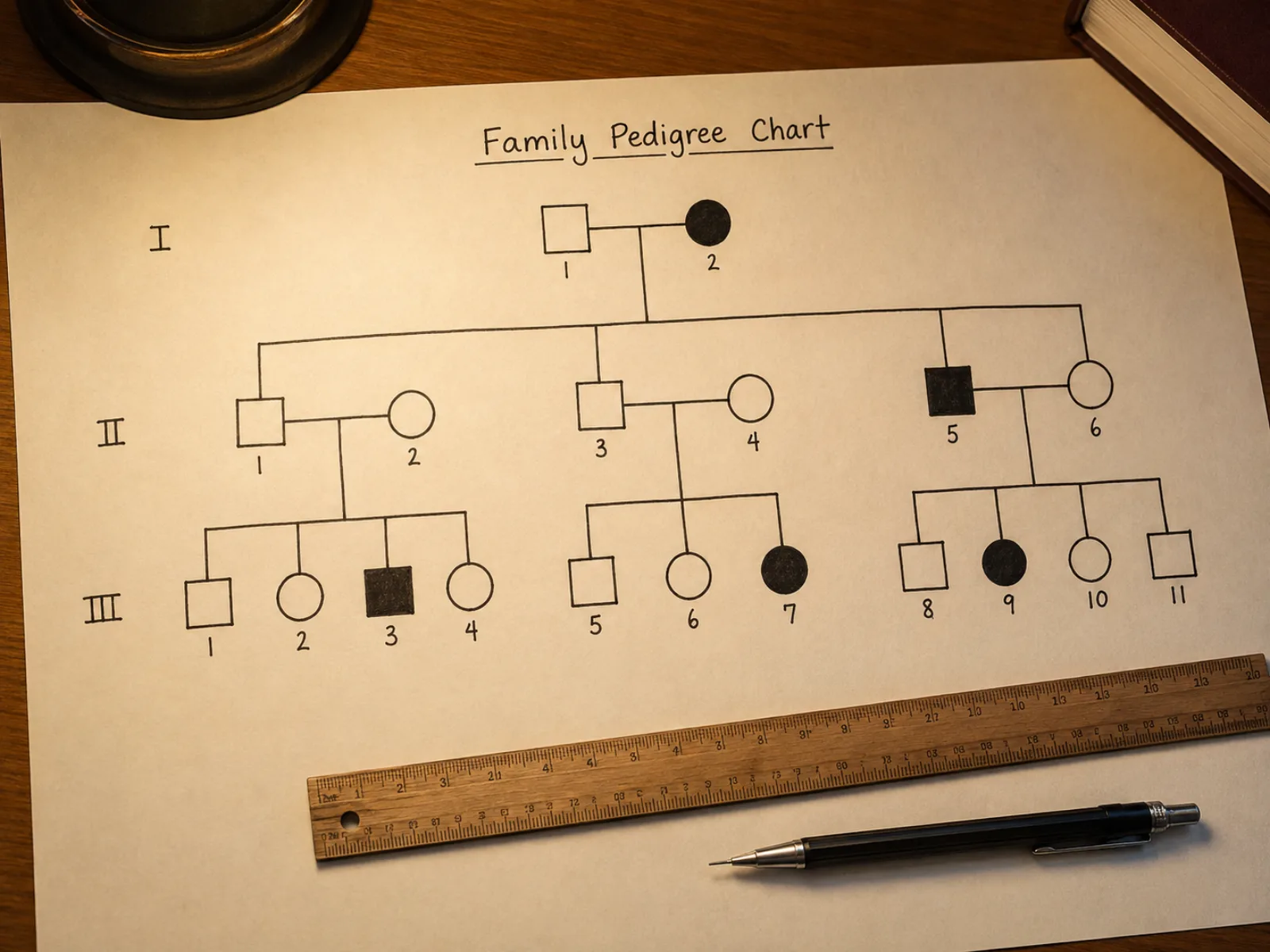
List parents once and every child listed under them is centered beneath the marriage line, with siblings connected by a shared horizontal line and generations stacked and numbered with roman numerals on the left, so nothing has to be dragged into place by hand.
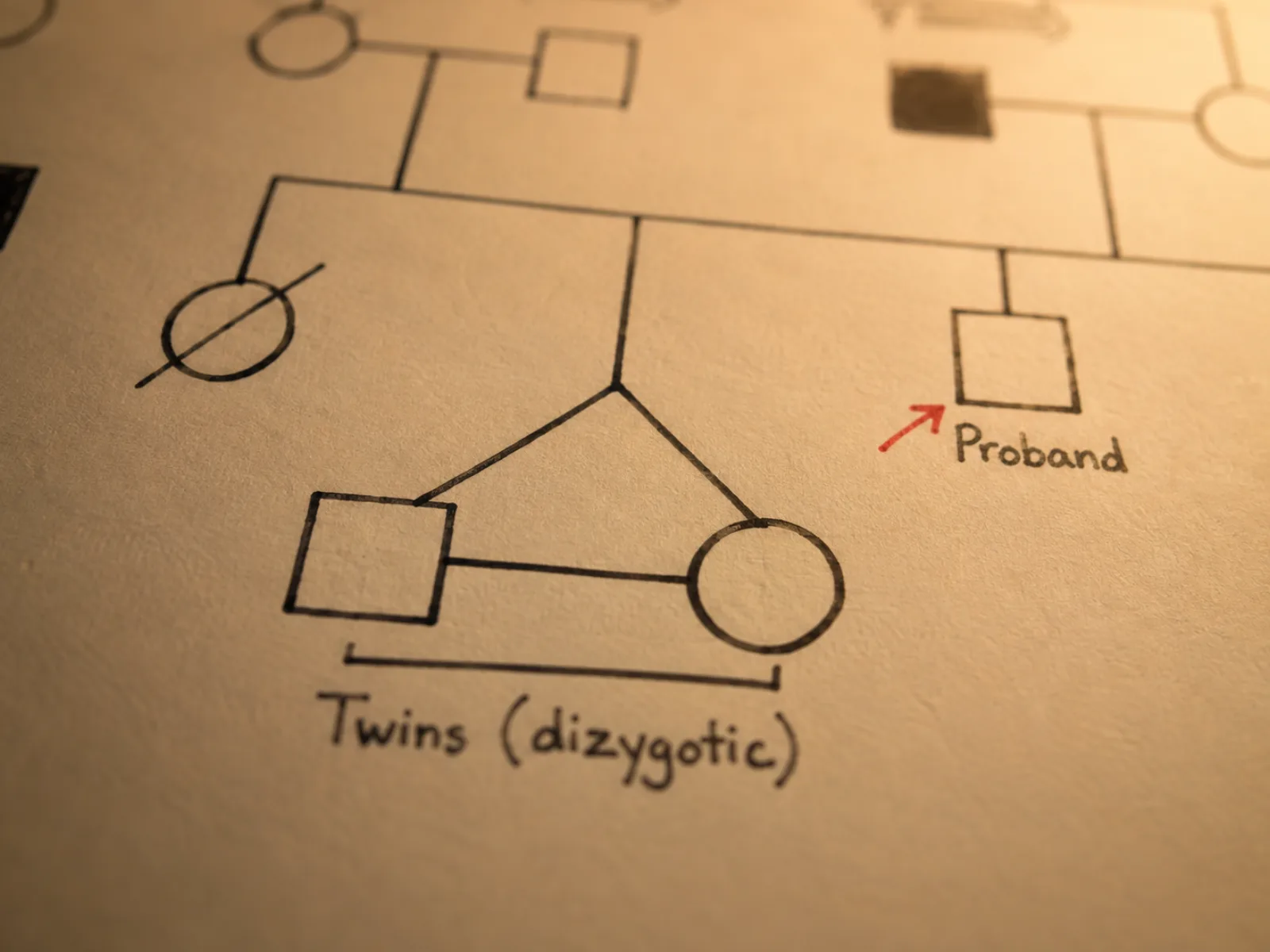
Twin siblings branch from one shared point with a horizontal bar added for identical twins, a diagonal line marks a deceased relative, and an arrow flags the proband — the person whose case led to the family being studied — all from a single flag on that person's line.
Common questions from biology students and teachers building a family pedigree diagram with this tool.
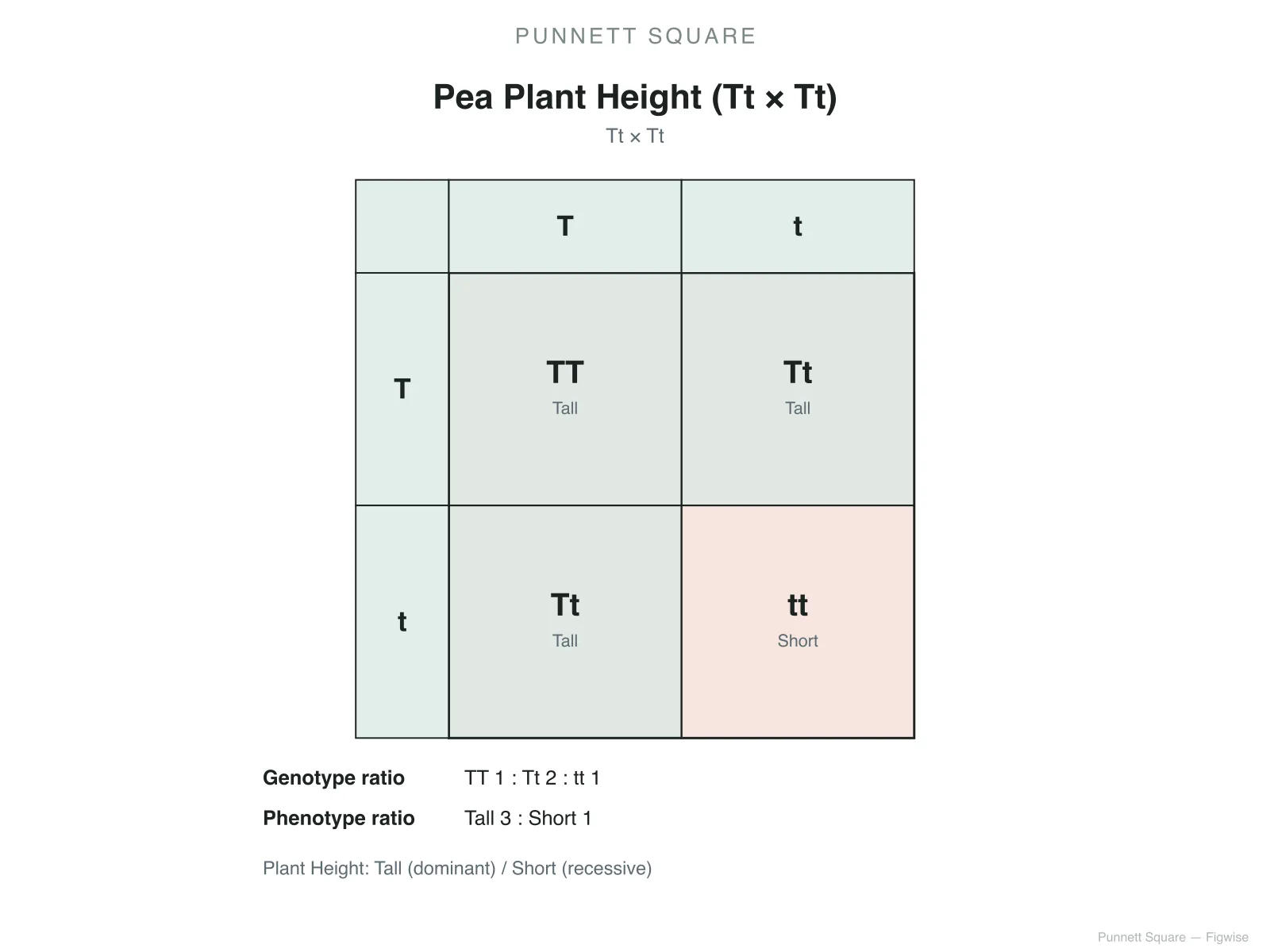
List the relatives, mark who's affected, and this pedigree chart maker draws the generations and symbols below while you type.